What Is System 32, and Why It Matters When Choosing Handles
The 32mm drilling standard behind most modern cabinetry — what it is, why it exists, and how it decides which handle sizes will fit.

System 32 is a cabinetry standard built around a 32mm grid. Holes for hinges, shelf pins, drawer runners and hardware are drilled at 32mm intervals along the cabinet side, which allows components from different manufacturers to fit the same carcass. It has been the basis of most mass-produced and trade-built cabinetry since the middle of the twentieth century.
For anyone specifying hardware, it matters for one reason: it determines which handle sizes will land on existing holes.
Where the number comes from
The 32mm interval was not chosen for elegance. It was chosen for machinery.
Multi-spindle boring machines — the equipment used to drill cabinet panels at volume — are built with drill bits set at fixed 32mm spacings. That distance is roughly the closest two bits can sit without the mechanism fouling.
Once the machinery settled on 32mm, the cabinetry followed. Hinge plates, runners, shelf supports and handle centres were all designed around multiples of it.
Why handle centres are what they are
The common handle centre sizes — 128mm, 160mm, 192mm, 224mm — are all multiples of 32mm. Four, five, six and seven intervals respectively.
They are not arbitrary. They exist because they align with a drilling grid designed for machinery that predates every brand currently selling hardware.
It also explains why the odd sizes in between are rare and awkward to source. A 150mm handle has no relationship to the grid, which means it cannot be drilled with the same setup and will not land on holes drilled to the standard.
We have written a full guide to cabinet handle sizing that covers how to choose between them.
What this means for a renovation
If your cabinetry was built by a commercial joinery, a kitchen manufacturer or a flat-pack supplier, it is almost certainly drilled to System 32.
That is good news when replacing hardware. Your existing holes will sit at a multiple of 32mm, which means any handle made to a standard centre size will fit without re-drilling.
If your cabinetry is bespoke, older, or imported, it may not. Hardware drilled to imperial spacings, or to a joiner’s own template, will return a measurement that does not resolve to a multiple of 32.
Measure before you assume. The test takes thirty seconds: remove a handle, measure centre to centre, and divide by 32. If the result is a whole number, you are on the grid.
The tolerance question
Aligning to the standard is only half the problem. The other half is holding the tolerance.
A handle nominally sized to 160mm centres is only useful if it is actually 160mm. Cast and hand-finished hardware can drift by a millimetre or more, which is enough to force a screw at an angle or refuse the holes entirely. Some manufacturers of solid stone hardware advise customers to wait until the piece arrives before confirming centre-to-centre measurements at all.
That advice is honest, but it is a tolerance problem passed to the customer.
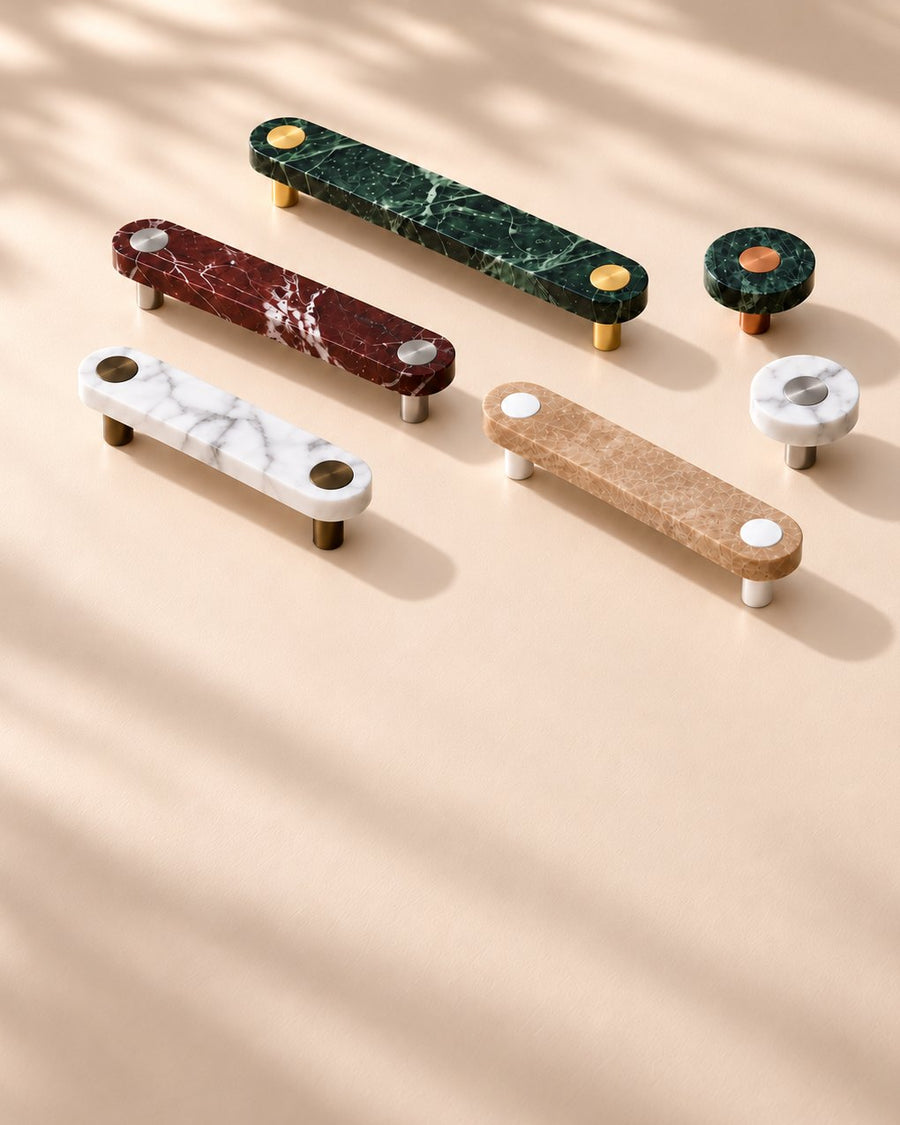
Sloan Roberts metal components are CNC-machined to specification, which holds the centres to a consistent measurement across every piece in an order. Marble and timber bodies are assembled around machined components rather than drilled after the fact.
The practical result is that a size can be specified from a drawing, before the hardware is in hand.
Specifying from plans
For designers and cabinetmakers, this is the part that matters.
Hardware often has to be selected before the joinery exists — at documentation stage, when a schedule is being issued and a client is approving a budget. Specifying a handle whose real dimensions are uncertain means either building in a contingency or accepting a return.
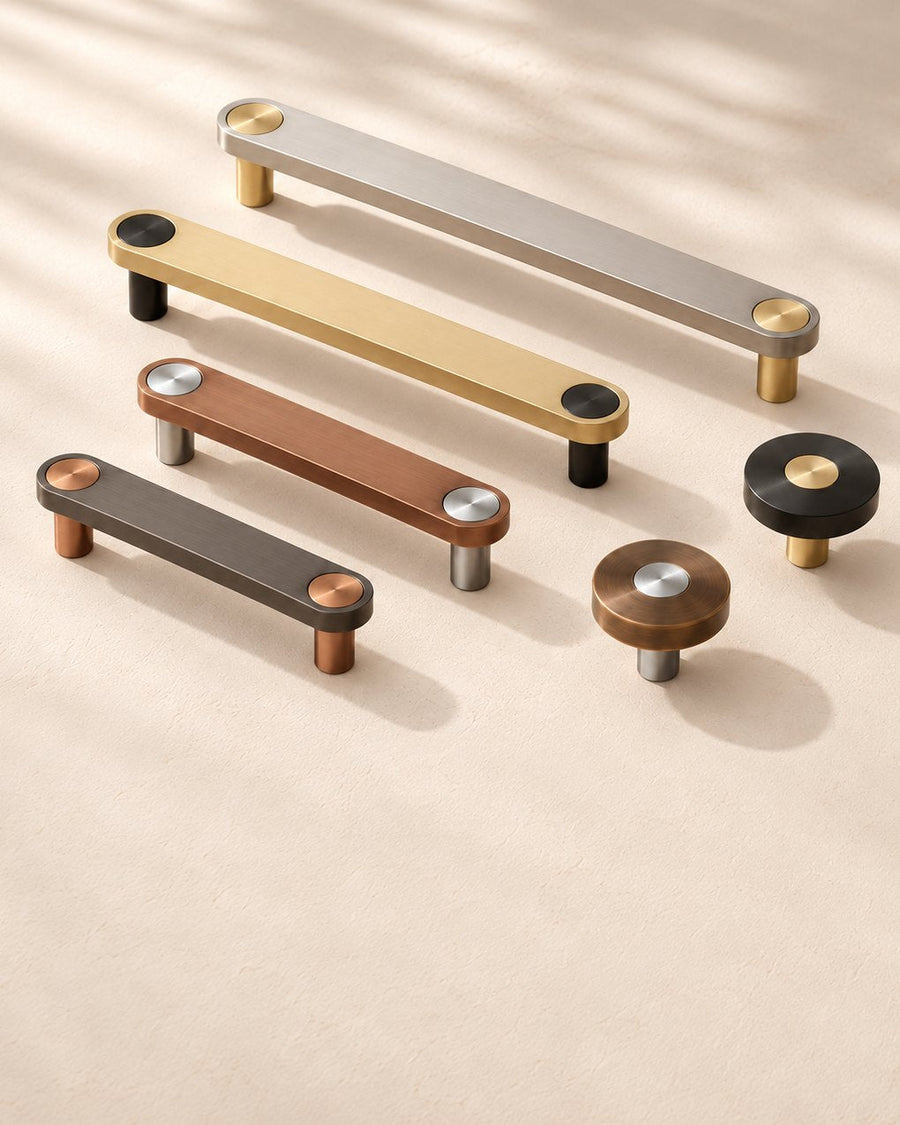
Every Ensemble product page carries the full dimensional set: centres in millimetres and inches, overall length and projection. Handles are rear-fixed and supplied with M4 × 22mm and M4 × 45mm break-off cabinet handle screws. The specification is the product, not an approximation of it.
Designers, builders and cabinetmakers can apply to our Trade Programme for specification support and trade pricing.
What System 32 does not cover
It is worth being clear about the limits.
System 32 governs the drilling grid. It does not govern handle length, projection, profile or fixing type. Two handles at 160mm centres can look entirely different and project from the door by different amounts.
Nor does it govern where on the drawer front the handle sits. Placement is a design decision, not a standard, and we have covered it separately in our guide to handle placement.
So the grid tells you what will fit. It tells you nothing about what will look right.
Common questions
What is System 32 in cabinet making?
A construction standard where holes for hinges, shelf pins, runners and hardware are drilled at 32mm intervals along the cabinet side. It allows components from different manufacturers to fit the same carcass.
Why is it 32mm?
The interval was set by the multi-spindle boring machines used to drill cabinet panels at volume. 32mm is approximately the closest the drill bits can sit without the mechanism fouling.
Are all cabinet handles System 32 compatible?
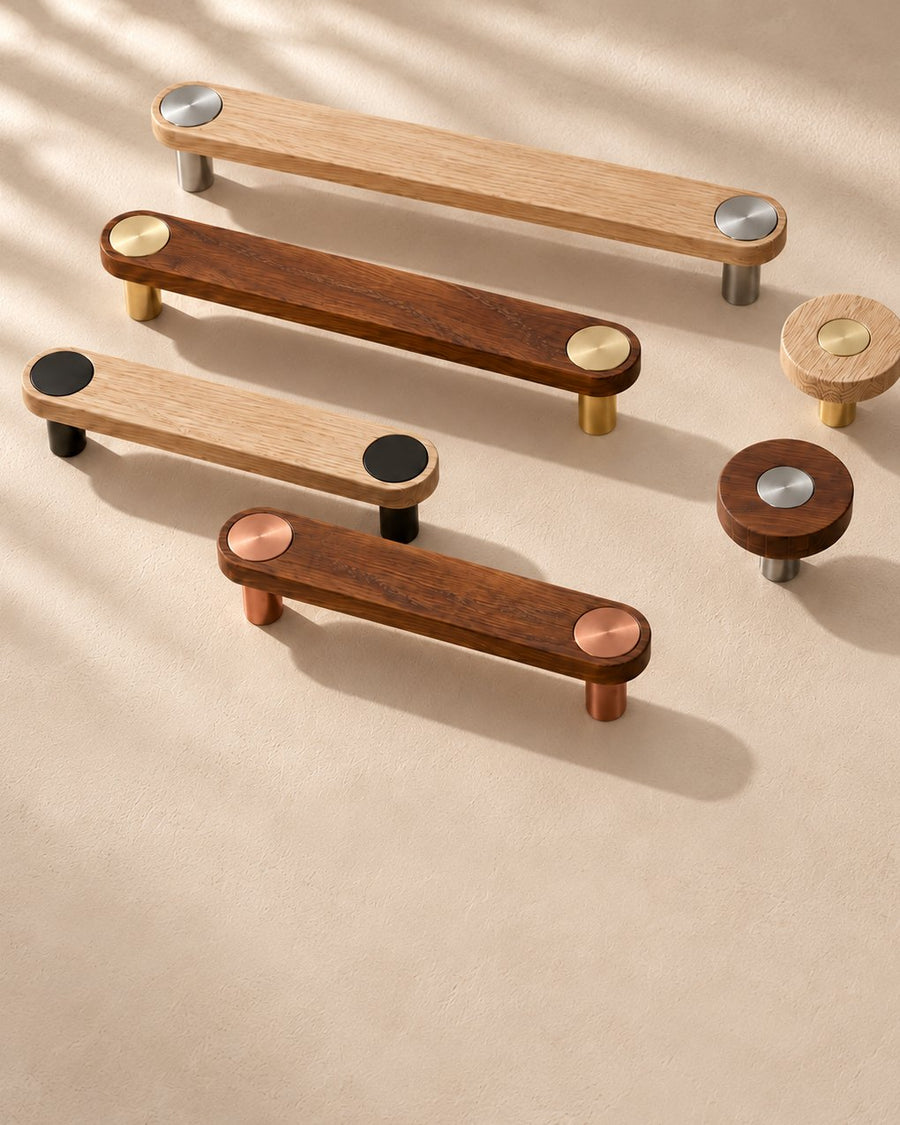
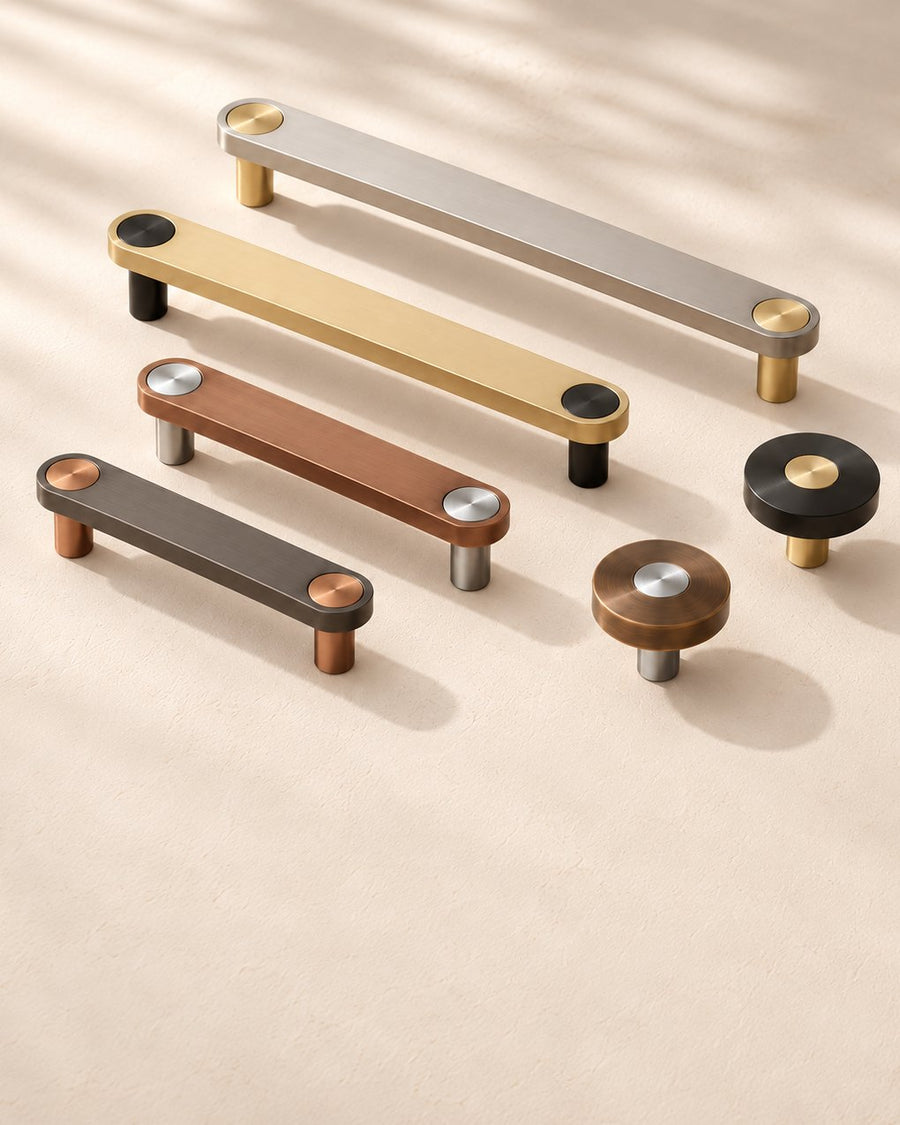
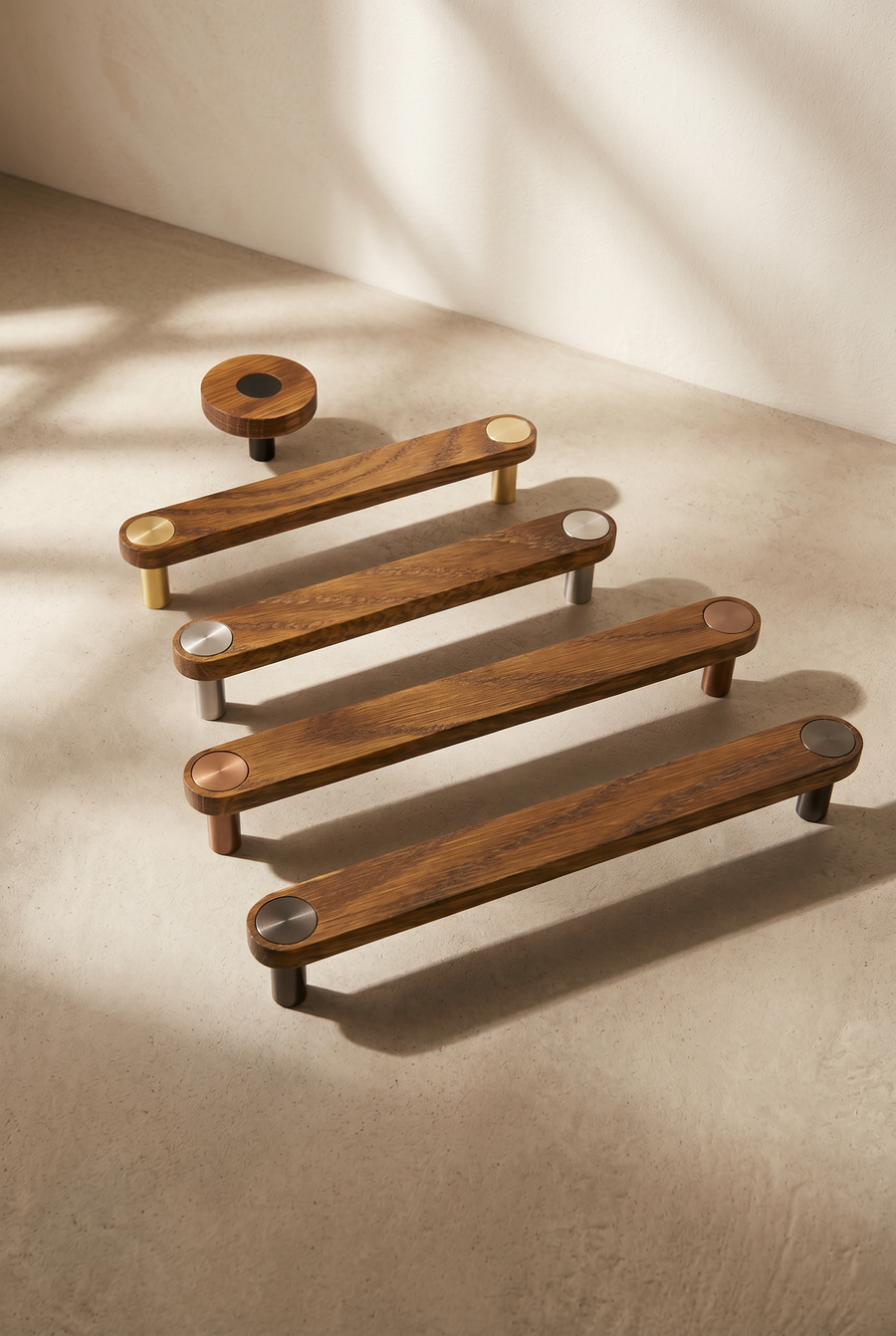
No. Handles at standard centre sizes — 128, 160, 192 and 224mm — are multiples of 32mm and align with the grid. Handles at non-standard sizes do not. Ensemble handles are made in all four standard sizes, with 224mm available in metal and timber.
How do I know if my cabinetry is System 32?
Remove a handle, measure the centre-to-centre distance, and divide by 32. A whole number means your cabinetry follows the standard.
Does System 32 apply in Australia?
Yes. Most Australian commercial joinery, kitchen manufacturing and flat-pack cabinetry is built to the 32mm grid.
Related reading
- Cabinet Handle Sizing: 128, 160, 192 or 224mm Centres?
- Where to Position Cabinet Handles
- When to Choose Your Cabinet Hardware in a Renovation
The standard is invisible in a finished room. It is the reason a handle fits, and the reason a replacement fits the same holes years later.
Materials, handled.
— David & Nigel