Mixing Metal Finishes in a Kitchen
Your tapware does not need to match your cabinet handles. How to mix finishes so a kitchen reads as deliberate rather than accidental.

Your tapware does not need to match your cabinet handles.
In fact, mixing finishes can give a kitchen more depth and personality than using the same metal everywhere. The secret is not perfect coordination. It is making every choice look deliberate.
Start with one dominant finish
Choose one finish to do most of the work. In many kitchens, this will be the cabinet hardware because it appears repeatedly across the room.
Then give your second finish a clear role: perhaps the tapware, pendant lights or hardware on the island. If you introduce a third finish, keep it to a small accent.
The familiar 60–30–10 principle is a helpful guide:
- Around 60 per cent in the dominant finish
- Around 30 per cent in a supporting finish
- Around 10 per cent as an accent
There is no need to calculate every handle and fitting. What matters is that one finish leads while the others support it.
Count what is already in the room
Before choosing your hardware, take stock of every visible metal.
Stainless steel appliances count. So do the sink, tapware, light fittings, powerpoints, switch plates and rangehood. Concealed hinges and drawer runners do not.
This matters because a kitchen with stainless steel appliances, brass handles and black tapware already contains three finishes. Adding another may make the room feel accidental rather than layered.
Choose contrast over a near-match
The easiest combinations are finishes that are clearly different.
Brass or aged bronze with matte black is a particularly reliable pairing. The warmth of the brass creates contrast, while black behaves almost like a neutral.
Brass or brushed copper can also work beautifully with brushed steel, especially in kitchens that combine traditional materials with contemporary forms.
Gunmetal and brushed steel produce a quieter, cooler palette. Just be careful with finishes that are very similar. Brushed nickel beside brushed steel can look less like an intentional contrast and more like an unsuccessful match.
If two finishes are almost the same, it is usually better to choose one.
Give each finish a job
Problems tend to appear when finishes are selected one item at a time: tapware at the beginning of the renovation, handles three months later and pendants just before installation.
Avoid “finish creep” by deciding on the complete palette early.
For example:
- Brushed steel for appliances and the sink
- Matte black for tapware and lighting
- Brass as a small detail on the cabinet handles
Repeating each finish in a defined way creates rhythm. Dividing the room equally between competing finishes usually creates confusion.
Check the finishes in your lighting
Metal changes under different light. Brass, copper and aged bronze tend to feel richer under warm light, while brushed steel, gunmetal and matte black remain relatively restrained.
View samples in the actual kitchen if possible—and check them in daylight, under task lighting and again in the evening. A finish that looks beautiful in a showroom may behave very differently at home.
Choose a mix that can evolve
Metal finishes move in and out of fashion, while a kitchen may remain in place for 15 to 20 years. That does not mean you must choose the safest finish available. It simply helps if the details can change without replacing the entire handle or altering the joinery.
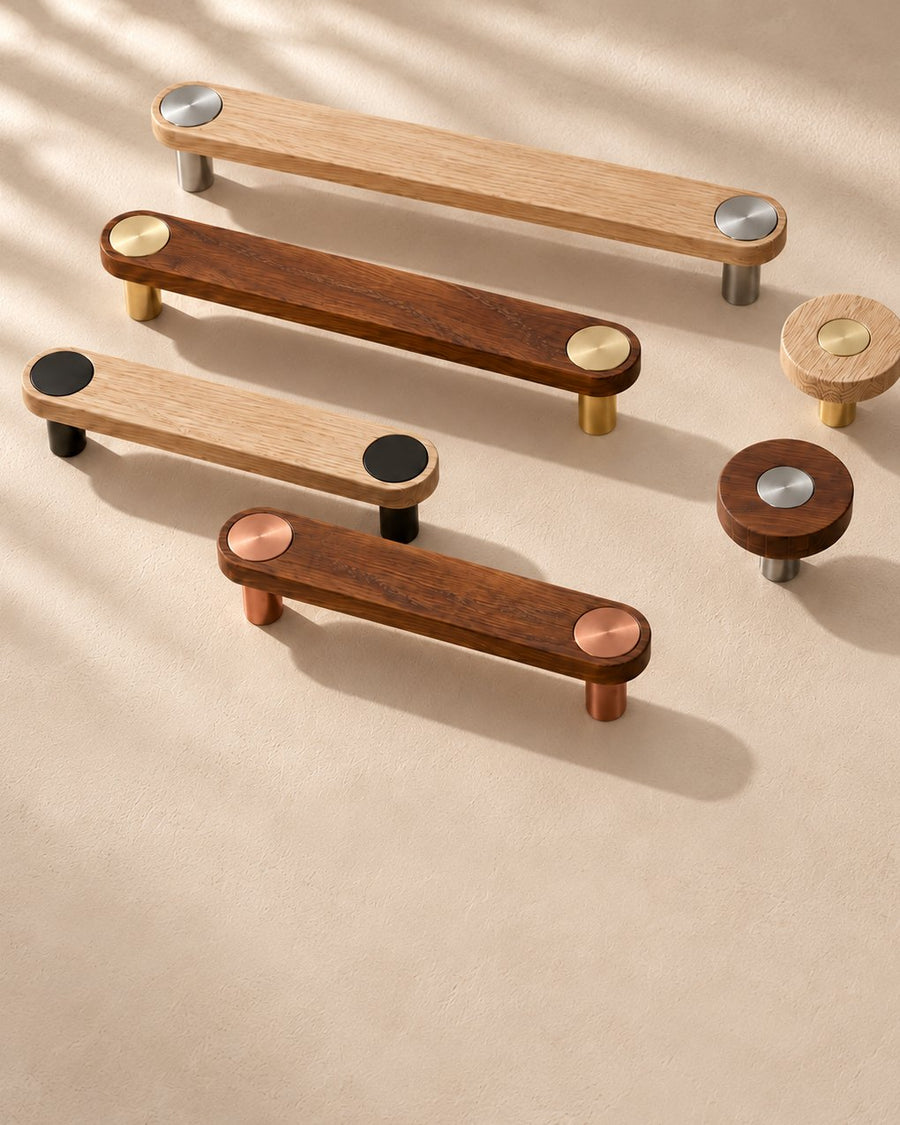
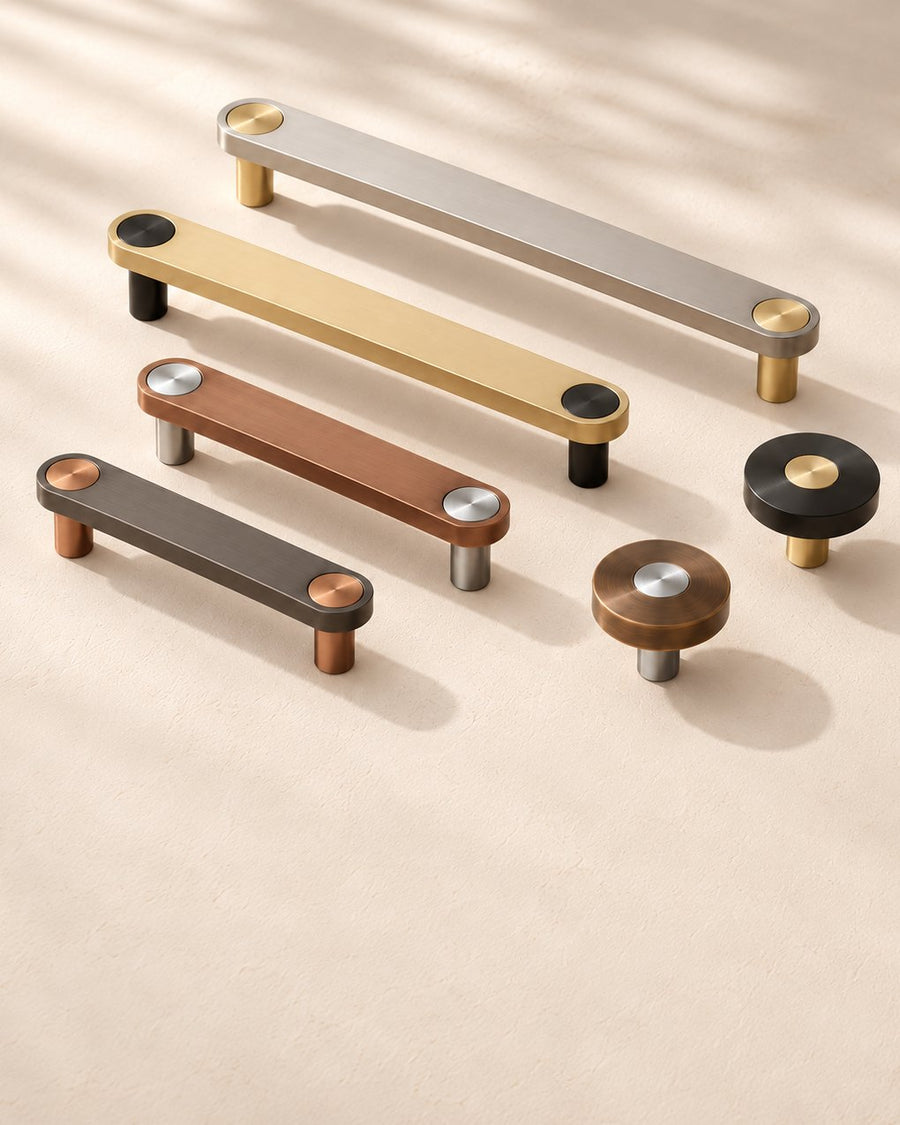
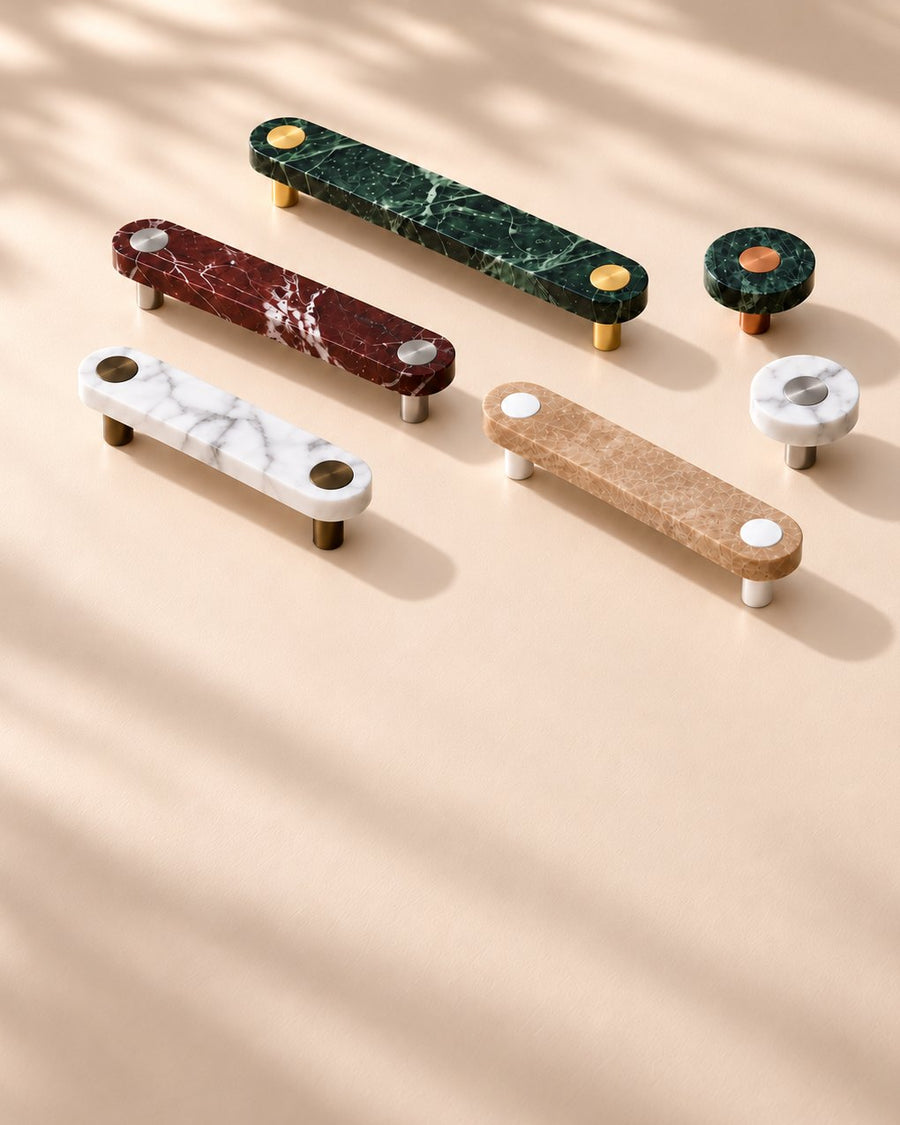
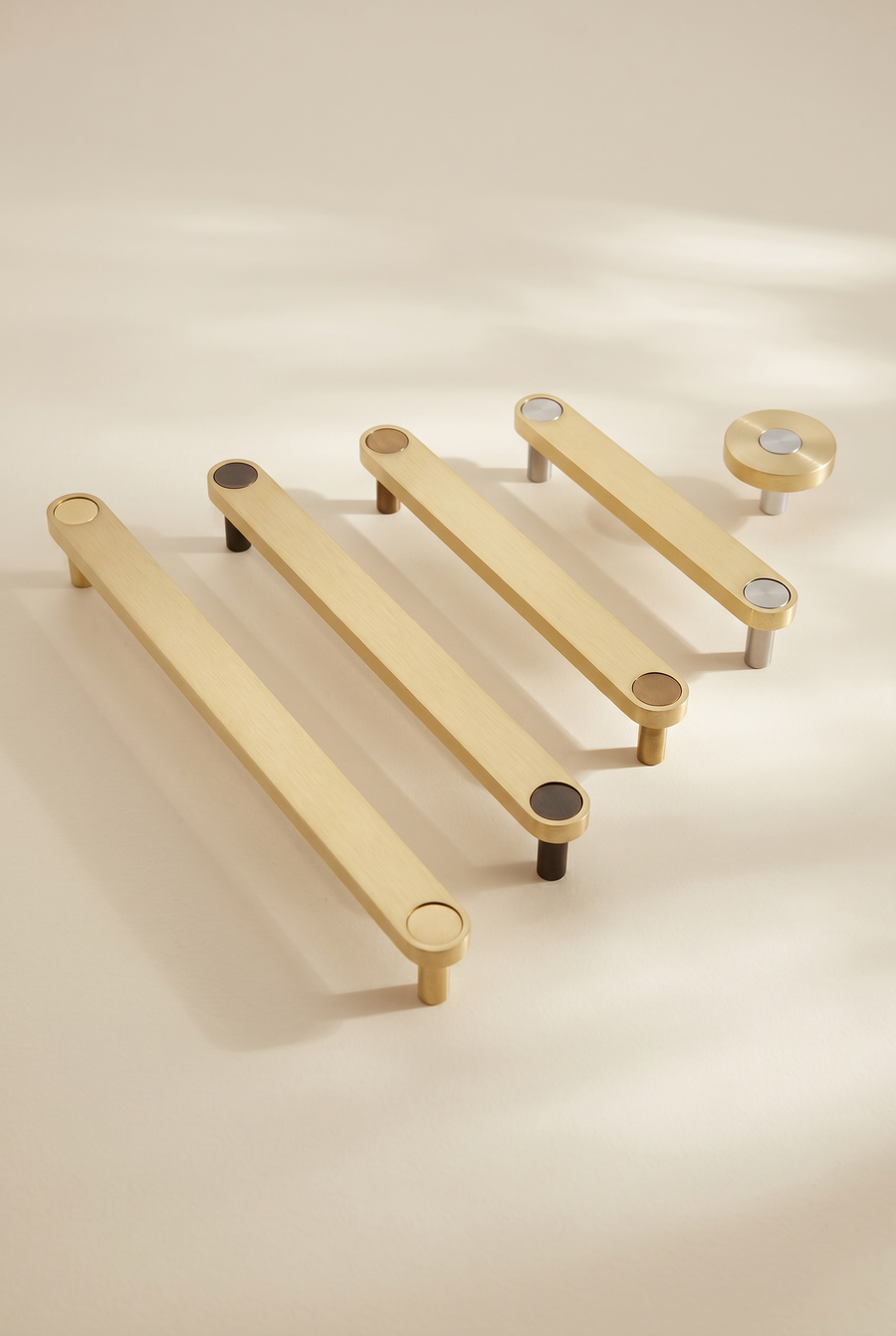
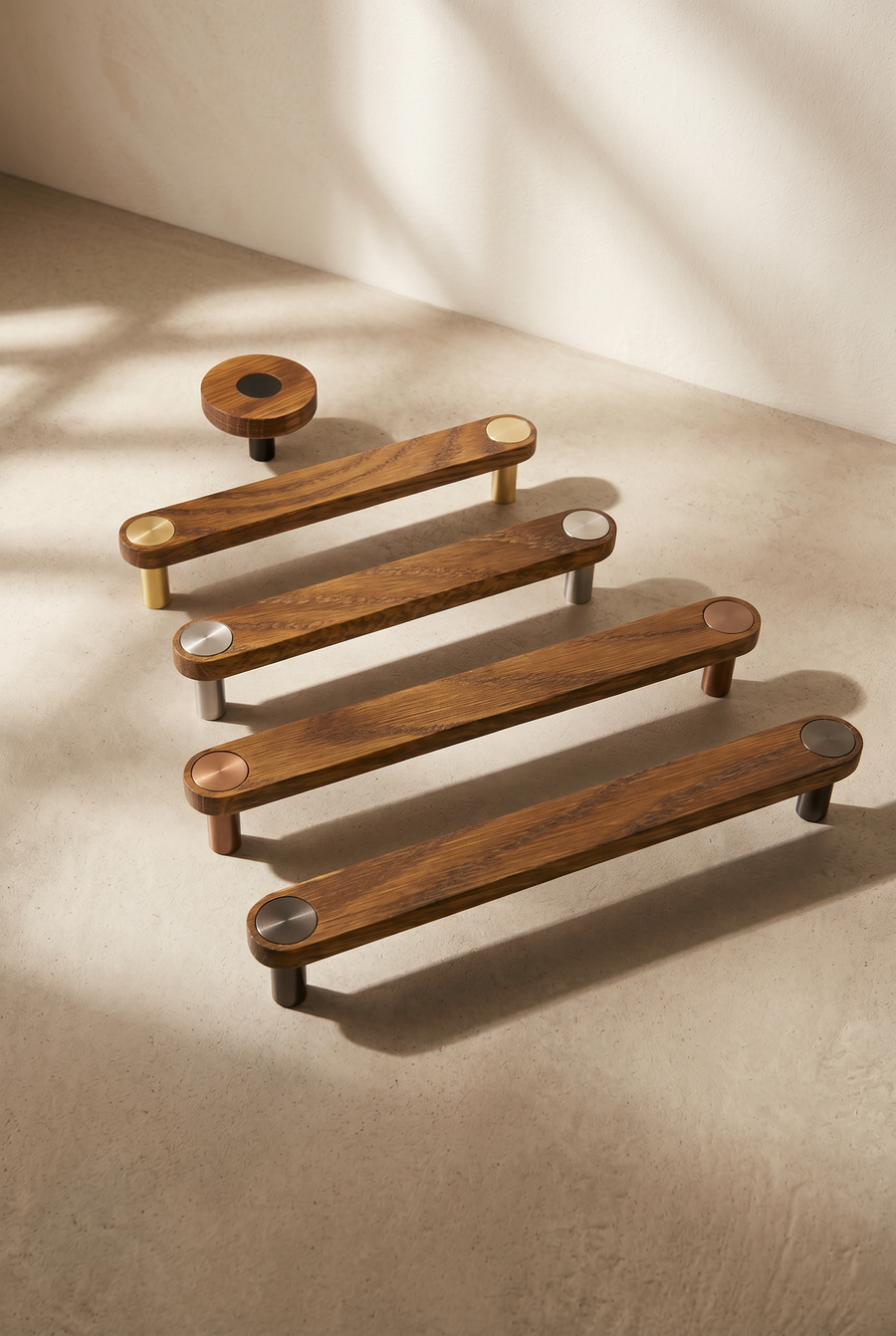
Ensemble handles are made with an interchangeable button detail, allowing the accent finish to be updated later while retaining the handle body.
The collection includes seven button finishes—Brass, Aged Bronze, Brushed Copper, Brushed Steel, Gunmetal, Matte Black and Matte White—across metal, timber and marble bodies. Each piece is made to order and assembled in Melbourne.
Mixing metals should not feel like a compromise. Done thoughtfully, it is what makes a kitchen feel collected, considered and distinctly yours.
Materials, handled.
— David & Nigel