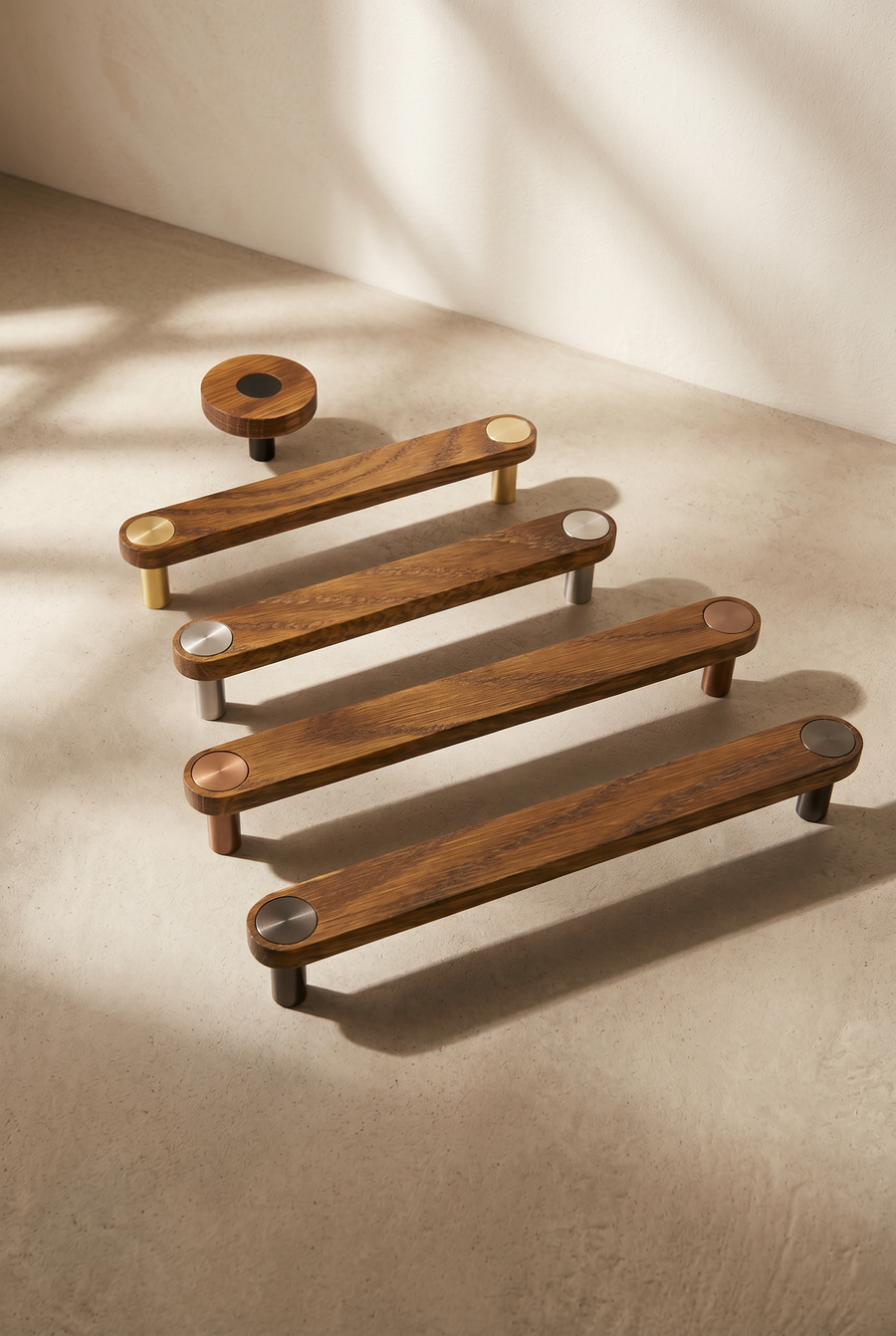
The Story Behind Ensemble: Hardware Composed Through Material and Detail
The thinking behind Ensemble — a modular cabinet hardware system composed through material and detail. Why we built a system, not a product, and what 450+ configurations actually mean in a finished room.

The idea for Ensemble began with a simple update at home.
While replacing a set of bedside handles, Sloan Roberts founders David and Nigel found themselves looking for something that felt more personal, more material and more resolved than the standard options available.
Most cabinet hardware followed a familiar pattern — one material, one finish, one fixed expression. But interiors rarely work that way. A room is a composition of timber, stone, metal, colour, texture, light and proportion. Tapware, lighting, cabinetry, furniture and accessories sit in conversation with one another. Hardware, one of the most touched elements in a home, often offered little ability to respond to that broader palette.
That gap became the starting point for Ensemble.
Compose, not select
Ensemble was created around a different idea: instead of asking people to simply choose a handle, the collection invites them to compose one.
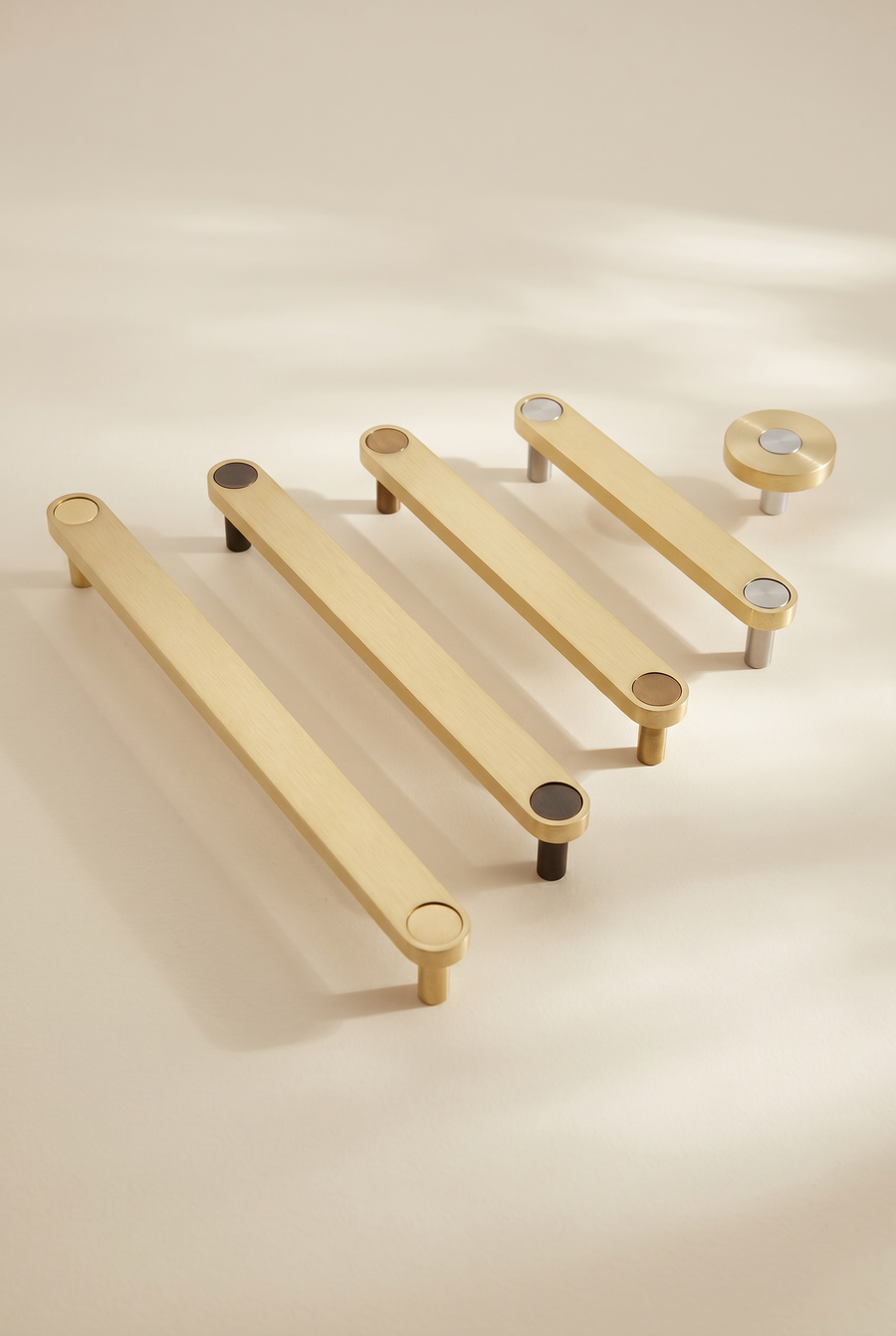
Each piece brings together a core material and a button detail, allowing the final expression to shift depending on the surrounding interior. The relationship can be tonal or contrasting, subtle or defined.
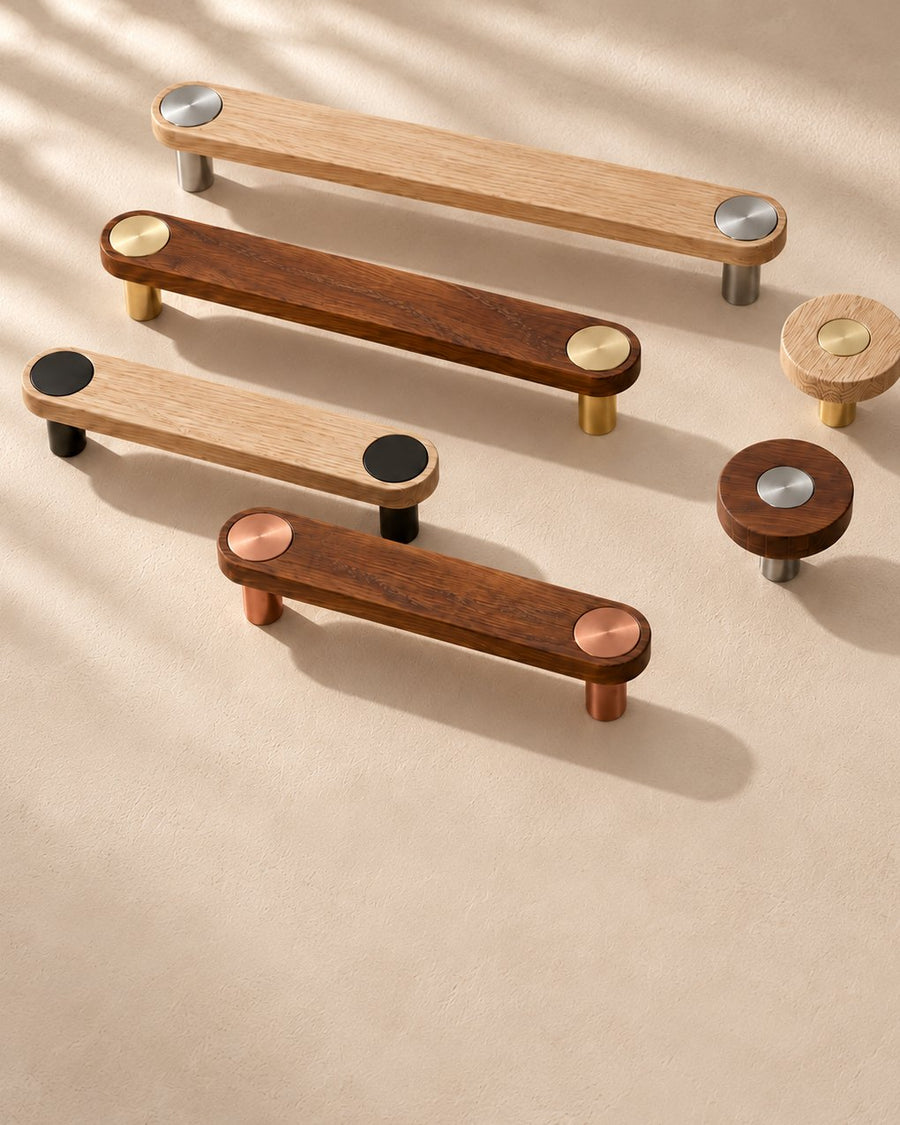
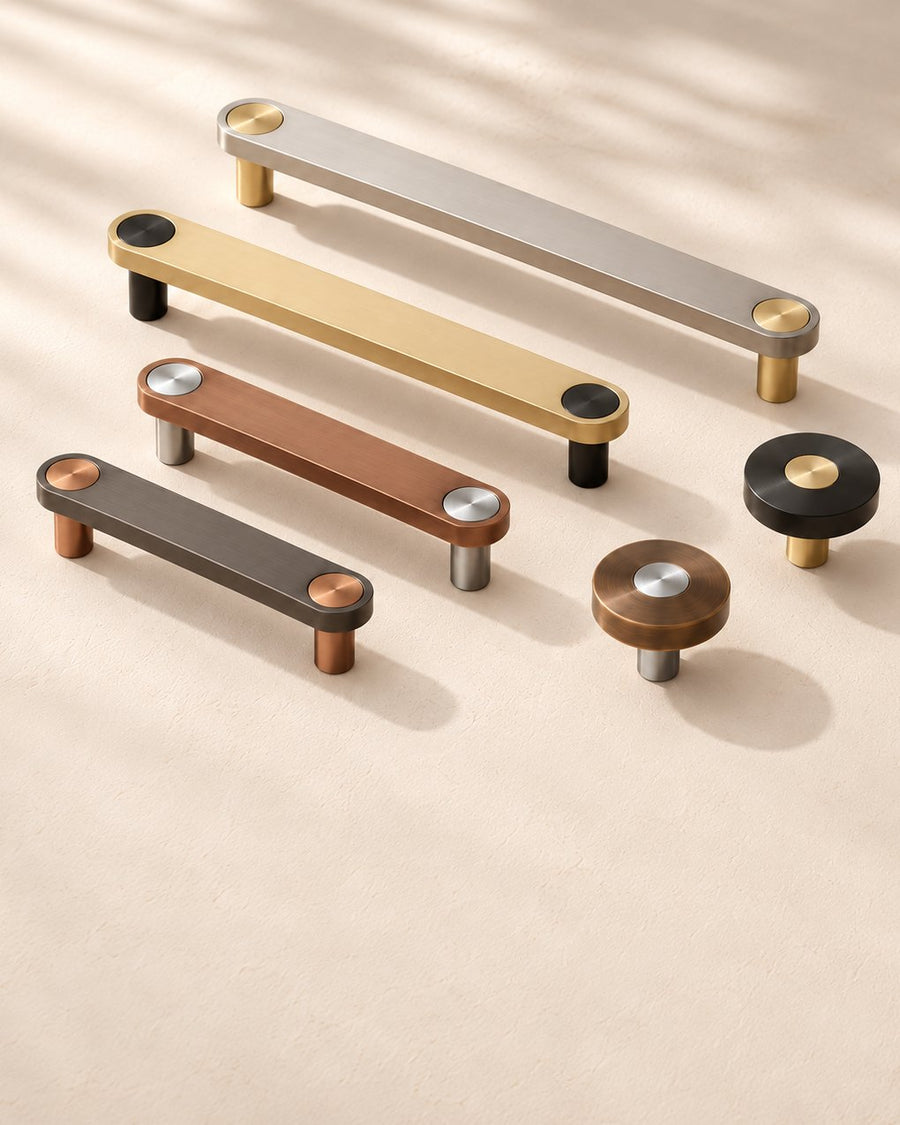
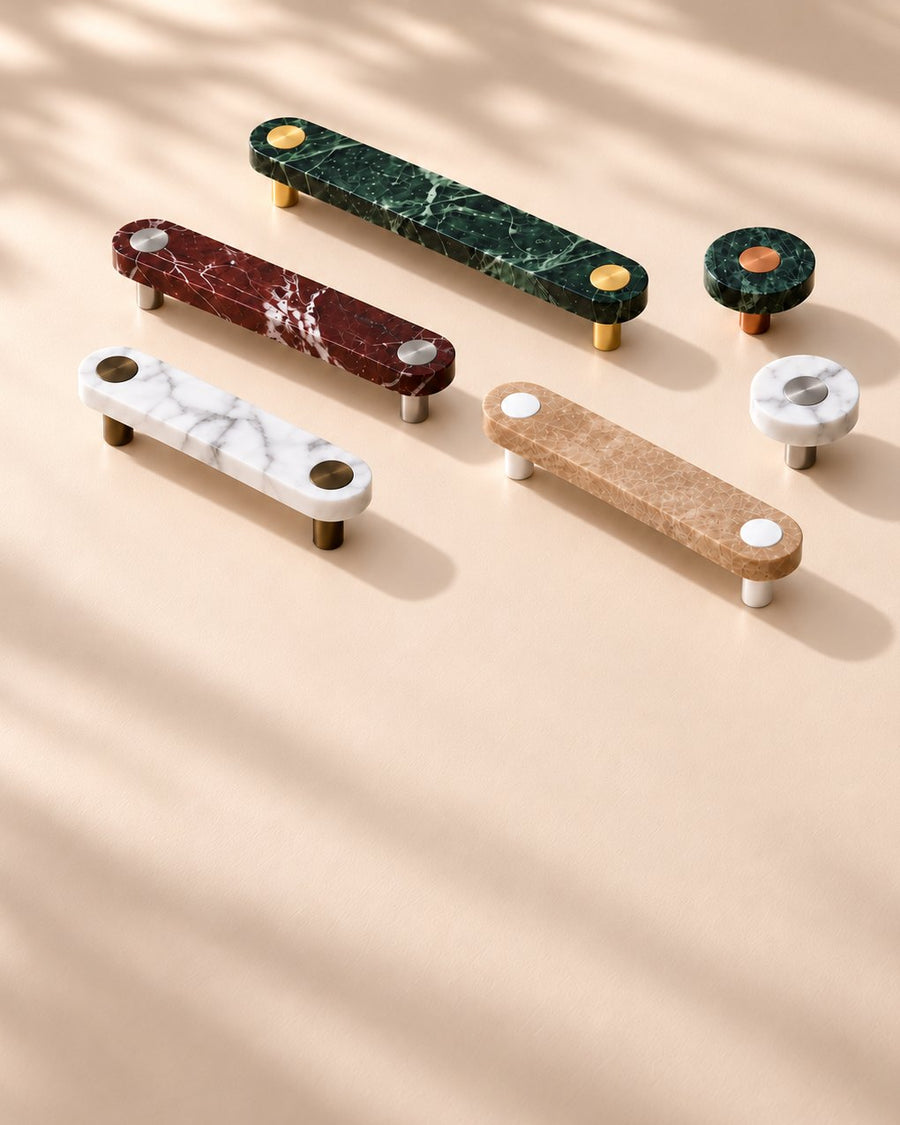
A timber pull in American White Oak with a brass button can sit softly within natural joinery. Garish (Verde Alpi) marble with gunmetal can feel architectural. Brushed steel with a matte black button can bring restraint and precision. The same form takes on a different character through material, finish and proportion.
The collection spans knobs and pulls from a single 40mm knob through to a 224mm bar handle, across three core materials and seven button finishes — over four hundred and fifty configurations in total. Each piece is built from interchangeable elements, allowing the hardware to respond to the design language of the space it belongs to.
The button detail
The button detail became central to the identity of Ensemble.
CNC-machined from solid aluminium, it acts as both connector and visual signature. It is a functional element, but also the point where contrast, alignment and material tension are expressed.
A marble handle can feel entirely different depending on the button finish selected. A warm brass detail draws out the richness of stone. A cooler gunmetal makes the same material feel more restrained. Timber can become softer, sharper, warmer or more architectural through this one small detail.
The button is small, but it changes the reading of the whole piece.
That is the essence of Ensemble: a system where small decisions matter.
Designed for interior palettes
Designers and renovators rarely build a room around one isolated finish. They consider relationships — timber against stone, metal against tile, cabinetry against light, tapware against hardware.
Ensemble was made to take part in that conversation. A piece can be selected to blend with cabinetry, contrast against joinery, echo the tone of a benchtop, or align with surrounding fittings. It gives hardware a more active role in the interior palette — especially in kitchens, bathrooms, wardrobes and built-in furniture, where the hardware is repeated and a considered detail can create rhythm across drawers, doors and joinery.
Materials, handled
Because Ensemble is built as a system, it can continue to evolve. New materials, finishes and formats can be introduced within the same design language — not chasing trend, but extending the platform.
Each piece is designed and assembled in Melbourne, Australia. The handles ship now; the Ensemble hook collection joins the system in November 2026.
Ensemble began with a simple question: what if hardware could respond more closely to the space it belongs to?
The answer is a collection designed through material, proportion and detail.
Materials, handled.
— David & Nigel